Beyond self-interest: Ethics and democracy
Our political, economic, and environmental crises stem from a false assumption about human beings as independent, self-interested units. Societies organized around interdependence—ethically, institutionally, and economically govern better.

A unique perspective
Democracy is under strain around the world. Polarization, inequality, and distrust have weakened not only institutions, but the civic habits and moral assumptions that sustain them.
My work brings together political theory, international relations, and Buddhist philosophy to explore a simple but neglected insight: democracy cannot be sustained by institutions alone—it also depends on how deeply citizens recognize their interdependence with one another and the world they share.
Drawing on historical and contemporary examples—from deliberative democratic theory to the Buddhist sangha and Bhutan’s experiment with Gross National Happiness—I examine how democracy might be renewed by widening our understanding of responsibility, cooperation, and the common good.

Democracy as a moral practice
Democracy fails not because people disagree, but because we’ve forgotten what we owe one another—and the world we share. I study democracy as a moral and social practice, not just a political system. My work examines democracy not only as a set of institutions, but as a moral practice rooted in how citizens understand themselves and their responsibilities to one another. Drawing on democratic theory, early Buddhist political thought, and comparative cases such as Bhutan, I argue that democratic decline today is driven less by disagreement than by the erosion of shared norms—equality, non-harm, pragmatic reasoning, and concern for the common good. These ideas are not foreign to Western traditions; they appear in thinkers like Adam Smith and in earlier democratic experiments. By treating democracy as a lived ethical system rather than a purely procedural one, my work offers a way to strengthen democratic governance without moralizing or abandoning pluralism.
Saving democracy: What would Buddha do?
Democracy is in trouble. Across the globe, it is being battered by populism, polarization, and widening political and economic inequality. For nearly two decades, democratic institutions have steadily weakened while authoritarianism has surged. This much is widely acknowledged.
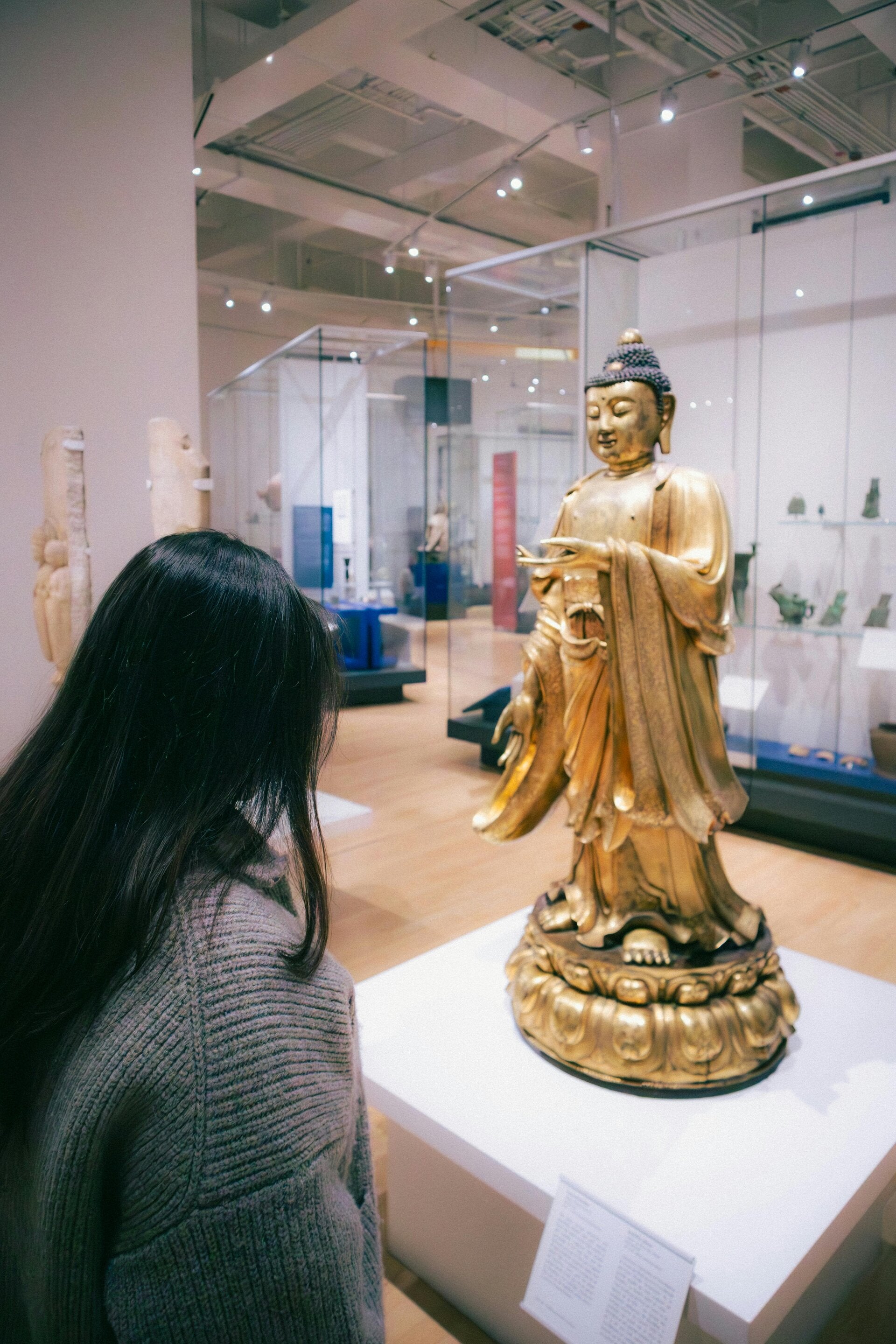
What is far less known—and newly relevant—is that the Buddha not only endorsed democratic principles but helped create what may have been the first fully inclusive, functioning deliberative democracy: the Buddhist sangha, the community of monks and nuns he founded more than 2,500 years ago.
In contemporary political theory, many Western thinkers argue that democracy must become more deliberative to survive. Deliberative democracy emphasizes public reasoning among free and equal citizens who seek consensus oriented toward the common good, rather than decisions driven by raw power, factionalism, or narrow self-interest. While this literature is substantial, it has largely ignored an important historical precedent: the Buddha’s sangha was not merely an idealized vision of deliberation but a working political system, documented in historical sources, that governed itself through collective discussion, inclusive participation, and consensus-based decision-making.
That omission matters. Critics often dismiss deliberative democracy as unrealistic—too demanding, too rational, or simply incompatible with human nature and modern politics. The Buddhist case directly challenges this skepticism. It shows that ordinary people, operating under the right conditions, are capable of sustaining inclusive and reasoned self-government. Deliberative democracy is not a utopian fantasy; it has existed in practice.
Equally important, the Buddhist example clarifies the conditions under which deliberative democracy can succeed. These conditions were embedded in the Buddha’s teachings and institutionalized in the sangha’s rules and procedures. They include a commitment to equality rather than rigid hierarchy; non-harm and compassion instead of violence, whether physical or structural; pragmatic problem-solving over ideology and factional loyalty; and a consistent orientation toward the common good rather than narrow individual or group interests. Together, these principles form a coherent “path” toward a more legitimate and responsible democracy.
If such a path exists, why are modern democracies failing to follow it? The problem is not that citizens are incapable of deliberation. Rather, contemporary political systems increasingly cultivate the opposite conditions: extreme inequality, concentrated power, permanent polarization, and civic disengagement. The United States is no exception. As economic disparities widen and political influence becomes ever more uneven, democratic legitimacy erodes.
From a Buddhist perspective, meaningful reform would require policies that reduce inequality and rebalance power—progressive taxation, limits on inherited wealth, an end to gerrymandering, curbs on private campaign financing, and term limits for elected officials. These are not radical proposals; they are institutional expressions of a deeper democratic ethic.
Yet the Buddha also insisted that political reform cannot succeed without moral and psychological transformation. Society, he taught, reflects the mental qualities of the individuals who compose it. “All experience is preceded by mind,” he famously said. Our political systems, in other words, mirror our collective habits of thought.
At the root of democratic decline, the Buddha would argue, lies a failure to recognize our interdependence. This blindness fuels egocentrism, hardens attachments and aversions, and drives polarization, alienation, and even violence. His remedy was what he called “fearlessness”: an awakened recognition of the equality and mutual reliance of all beings.
Applied politically, this vision challenges the assumption that selfishness and competition are natural and sufficient foundations for democracy. Instead, it suggests that a healthy democracy depends on empathy, care, and a shared sense of responsibility. Democracy rooted in interdependence does more than tolerate difference; it cultivates connection and common purpose.
What would Buddha do to save democracy? He would remind us that democratic renewal is not only institutional but moral—and that a more just political order begins with a wiser, more compassionate way of seeing one another.